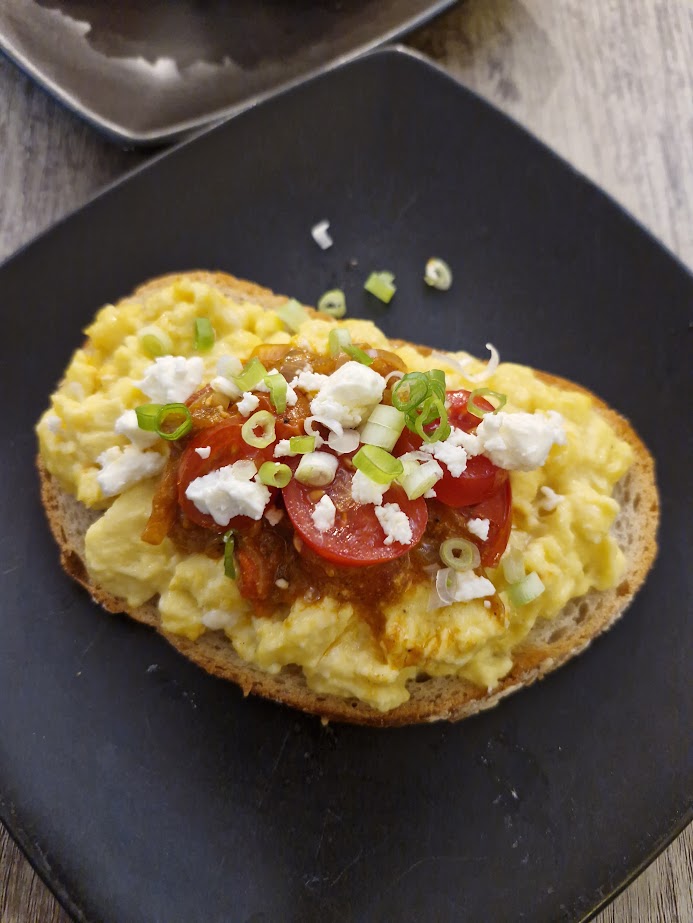

I remember eating strapatsada as a child. Not often, but enough to make the memory feel like slow Sunday mornings: olive oil warming in a pan, onions softening, the first hit of tomato and garlic, and of course the pungent notes of balsamic vinegar.
Across Greece, this dish appears under different names, the most common being kagianas (καγιανάς), which is also what we call it on the island. While the word strapatsada may echo the Italian strapazzare (“to scramble”), the dish itself grew out of local kitchens long before its modern name settled. Traditionally, Greek households, especially in the countryside, have small gardens where we grow tomatoes, cucumbers, courgettes, peppers and other vegetables. Chicken coops are not unusual either, so strapatsada appears in various forms across the country. Some cooks use peppers and herbs generously, others keep it plain with just eggs, tomato and a splash of vinegar.
Writing about this recipe, I came across something interesting: apparently tomatoes – now central to this and many other Greek dishes – were actually late arrivals in Greece.
They first appeared in the early 19th century, originating from South America, reportedly planted by a French monk in Athens around 1815. But for decades they were grown mostly as ornamentals because people feared they might be poisonous. I don’t question that story, given our suspicious temperament as a nation, but it feels a bit hard to believe because tomatoes have always been such a staple of our culinary culture. It turns out that it wasn’t until the late 19th and early 20th century that they became widely accepted in everyday cooking, especially in the Aegean islands where household gardens flourished.
As tomatoes naturalised into Greek cuisine, dishes like strapatsada evolved into the simple, comforting staple we recognise today: quick to make, inexpensive, and endlessly adaptable.
In Mytilene, fresh vegetables, olive oil and feta are central to everyday life, so there is no excuse when it comes to this recipe. It is the kind of food that fits the landscape – honest, simple and rustic, one of those dishes that speaks softly but lingers. It belongs to mornings that start late, or evenings when there isn’t much in the fridge.
In its simplicity lies something that feels complete; a reminder that flavour doesn’t need effort, just attention.
I cook this dish in the UK whenever I feel a bit nostalgic. When the pace of life gets a bit too overwhelming and I need something familiar and soothing. Over the years I have adjusted the recipe to my tastes and local ingredients, adding a bit of milk to make the eggs extra creamy, and a dash of cumin powder and thyme to deepen the flavours. I also enjoy a lot of vinegar, which may not be everyone’s cup of tea (pun intended), but I like the intensity it adds to an otherwise mild meal.
Part of what makes strapatsada so satisfying is the chemistry happening in the pan.
- Tomatoes and onions bring acidity, natural sugars, and glutamates – the same compounds responsible for umami – which deepen as they cook down into a concentrated base.
- Eggs, rich in fat and protein, mellow that acidity and create a creamy emulsion when stirred slowly into the tomato.
- Garlic and spices contribute aromatic compounds that round the whole dish out.
- Feta adds a layer of contrast: salty, tangy, and slightly sharp, it balances the sweetness of the reduced tomato and the softness of the eggs.
- A splash of balsamic vinegar heightens the brightness and brings out the unique flavours of the ingredients.
The result is deceptively simple harmony: sweet, salty, creamy, tangy, and savoury all at once, making Strapatsada wonderfully versatile. It can be eaten straight from the pan, but it becomes something a bit more special when paired with good quality bread: toasted sourdough, warm village loaf, or even simple pita. It also works well as a topping for toasted barley rusks (paximadi), or as part of a larger brunch plate with olives, cucumbers, and a drizzle of olive oil. In some regions it may be served with ouzo as a light meze.
Easy Kagianias Greek Scrambed Eggs Recipe
A rustic Greek dish of creamy scrambled eggs simmered with tomato, garlic, and feta — simple, comforting, and full of flavour.
Ingredients
-
2 eggs
-
1 tbsp milk
-
1 shallot (finely chopped)
-
1 medium-large tomato (grated or finely chopped)
-
Optional: a chickpea-sized dash of tomato paste
-
1 large garlic clove (minced)
-
2 tbsp olive oil
-
100 g feta cheese (crumbled)
-
Balsamic vinegar (to taste)
-
Salt & pepper (to taste)
-
Dash of cumin powder
-
Dash of thyme (fresh or dried)
Equipment
-
Nonstick frying pan
-
Mixing bowl
-
Wooden Spoon
Instructions
-
Heat olive oil in a nonstick pan over medium heat.
-
Add shallot and garlic; cook until soft and fragrant (2–3 minutes).
-
Stir in tomato, salt, pepper, cumin, and thyme. Simmer 3–5 minutes until reduced.
-
Add a splash of balsamic vinegar and adjust seasoning to taste.
-
In a small bowl, beat eggs with milk.
-
Lower heat slightly, pour egg mixture into the pan, and gently stir to scramble with tomato sauce. (Alternatively you can make the eggs separately and add the tomato sauce on top)
-
Once nearly set but still soft, stir in crumbled feta and cook for another minute until creamy.
-
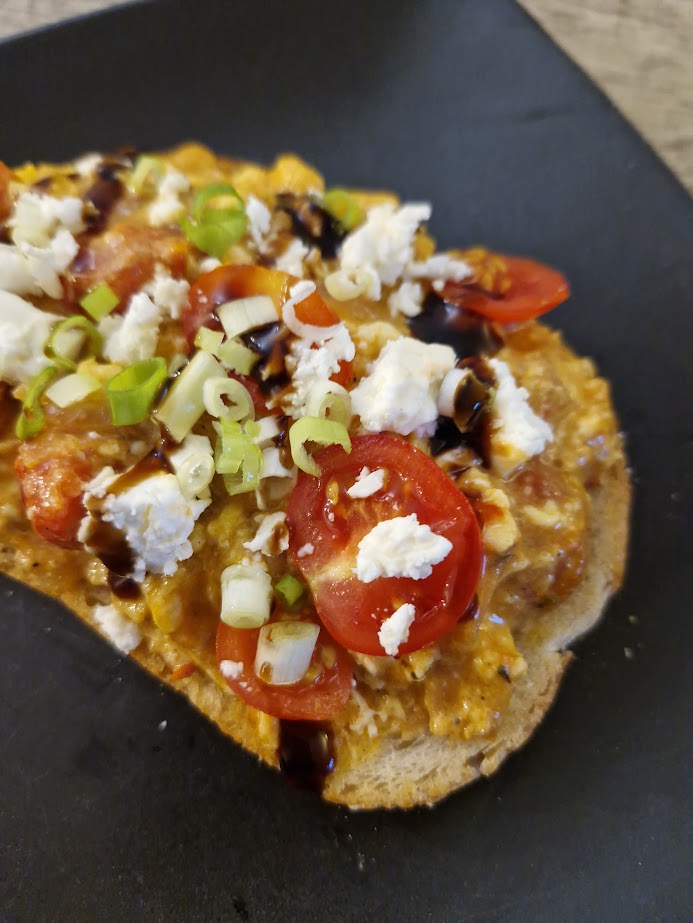
Serve warm with crusty bread or toasted pita. Optional: drizzle with balsamic glaze and extra feta.
Notes
Strapatsada (also known as kagianas) is a classic Greek comfort food. Adjust vinegar and feta to taste; it pairs beautifully with bread or rusks and a drizzle of olive oil.
Leave a Reply