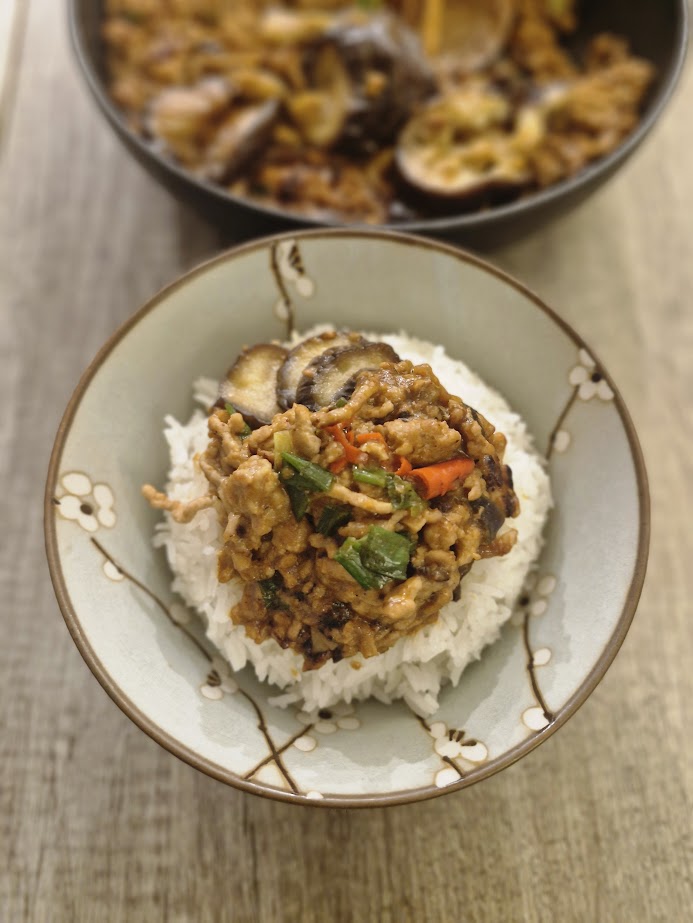

The dish, Eggplant with Minced Pork, is less a recipe and more a recurring bookmark in the story of my kitchen. For years, the foundation of this meal lay, quite literally, in a small, foil-lined packet of premix. This packet wasn’t just seasoning; it was a little shortcut, a culinary cheat sheet we’d lean on after a long day.
But there was a downside to this reliance on convenience. Our cupboard, a deep, dark cavern of forgotten ambitions, became a graveyard for the premix. Every few years, during a heroic cleaning spree, we’d uncover them – small, brittle packets lurking behind bags of ancient flour and forgotten lentils. They’d be years past their expiry date, silent relics of a meal we almost made, a testament to the fact that we clearly bought more than we ever used. I’d hold a dusty packet, feeling a strange mix of guilt and amusement, before consigning it to the bin.
The sheer volume of these discarded mixes was the first clue that the packet was unnecessary. Why was I paying for a pre-blended mix when the dish, at its heart, was simple: sautéed pork, tender eggplant, and a good punch of savoury, spicy sauce?
This realization led to an evolution. The pork mince and eggplant remained the same, but the mystery of the sauce had to be solved. And that’s where the premix’s greatest rival and ally entered the picture: Korean Gochujang.
While I still haven’t perfected a scratch-made sauce that fully replaces the premix’s exact flavour profile or the authenticity of Chinese chili bean paste, I found a beautiful compromise. Gochujang – the versatile, fermented Korean chili paste, brings a deep, spicy, and slightly sweet backbone to the dish.
The true beauty of this substitution isn’t just the flavour; it’s the effectivness. My fridge already holds a massive tub of Gochujang for making quick bibimbap sauce or a spicy stew. Now, it has a second, vital purpose. No more buying single-use packets. No more accidental archaeology in the back of the cupboard.
Today, when I make Eggplant with Minced Pork, there’s a quiet satisfaction. It’s a dish that represents taking control of the flavour and simplifying the pantry. It’s proof that sometimes the best flavour is found not in a branded convenience mix, but in a giant, useful tub of something already loved.
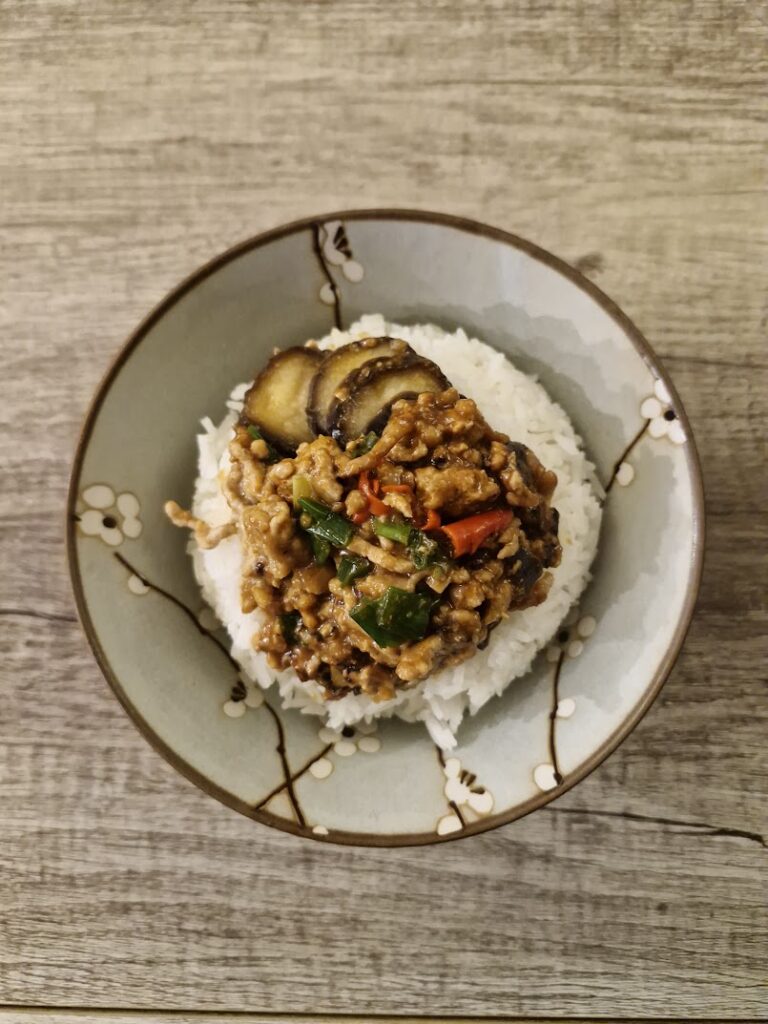
Spicy Eggplant with Minced Pork (A simplified version) 魚香茄子
A quick and flavorful Chinese dish featuring steamed eggplant and minced pork in a savory, spicy sauce.
Ingredients
-
1 medium Eggplant
-
500 g Minced Pork
-
1 clove Garlic, minced
-
1 tsp Cornstarch
-
1 tsp Rice Vinegar (米醋)
-
1 Pinch Salt
-
1 tbsp Chili Bean Sauce (豆瓣醬, I used Gouchujang as a subsititue)
-
1 tbsp Shaoxing Wine ((optional))
-
1 stalk Scallion (蔥花 chopped (optional, for garnish))
Equipment
-
Steamer
-
Wok or Large Frying Pan
Instructions
-
Steam the Eggplant: Steam the eggplant segments with the rice vinegar and salt for a few minutes until tender.
-
Prepare the Pork: Toss the minced pork with the cornstarch to coat.
-
Sauté Aromatics: Heat a wok or pan with a little oil over medium-high heat. First, sauté the minced garlic until fragrant.
-
Cook the Pork: Add the minced pork and stir-fry until cooked through and browned.
-
Deglaze (Optional): Add the Shaoxing wine (if using) and let it bubble and evaporate slightly.
-
Add the Sauce: Add the chili bean paste and chili. Stir well to combine and cook the sauce for about 30 seconds until fragrant.
-
Combine: Add the steamed eggplant along with the reserved steaming liquid to the pan.
-
Simmer and Finish: Cover the pot, turn off the heat, and let it sit for 1-2 minutes to allow the flavors to meld.
-
Serve: Garnish with chopped scallions (if using) and serve immediately.
Notes
The dish can be adjusted for spiciness by changing the amount of chili bean paste used.
Leave a Reply